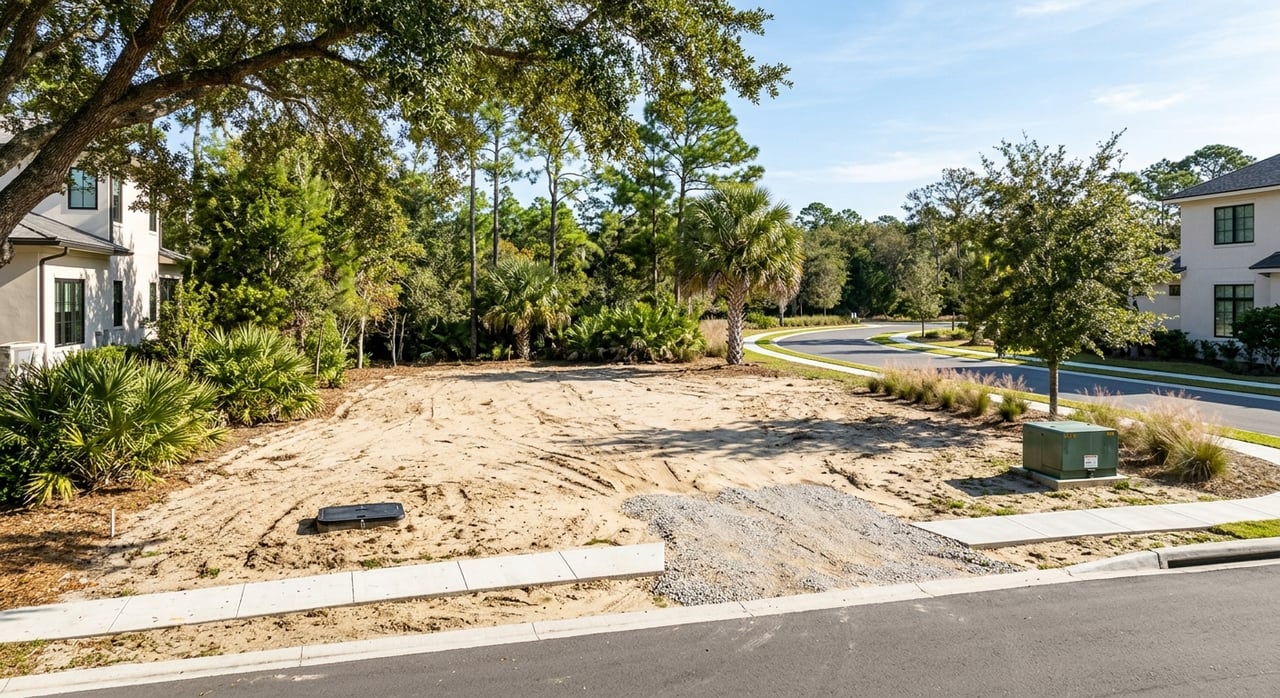
If you are looking at land in Freeport, the biggest opportunity is not always the biggest parcel. In a fast-growing market, what matters most is what a site can realistically support based on zoning, utilities, frontage, and access. Whether you want to buy, sell, or hold land for future use, understanding those moving parts can help you avoid costly surprises and spot stronger opportunities early. Let’s dive in.
Why Freeport land is getting attention
Freeport is growing quickly, and that growth is part of why land here is drawing interest from buyers, builders, and investors. According to the U.S. Census Bureau QuickFacts for Freeport, the city’s population rose from 5,861 in the 2020 Census to an estimated 7,234 on July 1, 2024. Walton County also grew from 75,305 in 2020 to an estimated 89,666 in 2024.
That kind of growth can create demand for homes, services, and commercial space. At the same time, Walton County’s Future Land Use Element makes it clear that growth should be planned in a way that supports infrastructure, protects natural resources, and maintains community character. For you as a land buyer or seller, that means value is often tied to development feasibility, not just acreage.
What makes a parcel valuable
In Freeport, land value often comes down to a simple question: what can this property become under current rules and service conditions? A parcel with good access, workable frontage, and utility availability may offer more real-world value than a larger tract with major constraints.
That is why land decisions here usually start with due diligence. Before you treat a parcel as buildable, it helps to verify future land use, zoning, utility service, access, and any site limits that could affect timing or cost.
Common land types in Freeport
Freeport’s land development code includes a wide range of zoning districts. In practical terms, you may come across:
- Platted single-family lots
- Rural residential acreage
- Neighborhood-commercial infill sites
- Mixed-use or commercial frontage parcels
- Industrial-oriented tracts
- Larger acreage that may be suited for future subdivision or assembly
That range is one reason land searches in Freeport need a property-specific approach. Two parcels with similar size can have very different development paths depending on district standards and infrastructure.
Why zoning and land use matter
Zoning and future land use are not the same thing, but both shape what may be possible on a parcel. Freeport’s code includes districts such as rural agricultural, low-density residential, medium-density residential, neighborhood commercial, general commercial, light industrial, general industrial, conservation, and more.
The details matter. For example, the city’s schedule of dimensional requirements shows that low-density residential districts list 10,000 square feet per dwelling unit and 50 feet of frontage at the right-of-way. Industrial districts require much larger sites, including 6 acres for light industrial and 10 acres for general industrial, along with substantial width near the right-of-way.
For rural-village areas, commercial uses are also limited by location and frontage rules. That means a parcel that looks promising on a map may still need a closer review before you assume it fits your plan.
Frontage can change the picture
Frontage is more important than many buyers expect. Freeport’s code definitions distinguish between a lot of record, corner lot, double-frontage lot, and other geometry issues that affect how a site is measured and used.
For residential property, frontage is measured along the street right-of-way. For agricultural, commercial, and industrial parcels, frontage is measured along the street with the heaviest traffic usage. That can affect visibility, driveway placement, survey interpretation, and how a property is marketed.
Utilities often drive the timeline
One of the biggest dividing lines in the Freeport land market is access to central water and sewer. If central utilities are not available, the city code requires larger minimum lot sizes for septic and well setups.
Under the Freeport land development code, the minimums include:
- 1 acre for residential septic and well
- 1 acre for residential aerobic septic and well
- 1/2 acre for residential septic with central water
- 1 acre for non-residential septic and well
This is why utility verification should happen early. A parcel may be legally described as a lot, but that does not automatically mean it is ready for the type of development you have in mind.
City service areas affect costs
Utility access is not just about feasibility. It can also affect operating costs and deposits. Based on the city’s 2024-2025 utility rate sheet, residential water and sewer base rates are lower inside city limits than outside city limits, and deposit amounts are different as well.
Commercial users also face different base rates and deposits depending on location. For owners evaluating a long-term hold, a future build, or a commercial site, service boundaries can influence the financial picture.
US 331 is a key development corridor
If you are watching future development opportunities in Freeport, the US 331 corridor deserves close attention. Walton County’s US 331 and SR 20 East Economic Development Corridor overview points to transportation improvements, bridge-related connectivity, and the potential for central sewer expansion as drivers of future demand.
The corridor plan also notes that the City of Freeport is extending potable water and sanitary sewer infrastructure along US 331 from the Clyde B. Wells Bridge to the city’s northern boundary. It further states that the wastewater treatment plant is expected to expand from 600,000 gallons per day to 1.5 million gallons per day. For landowners and buyers, that means utility service is part of a larger growth story, not a fixed condition.
Where opportunity may be strongest
The same corridor plan identifies activity centers north and south of Freeport. In the south activity center, the plan describes vacant undeveloped land as the greatest development opportunity.
It also states that nearly 25% of the land in the two activity centers is vacant, while commercial and industrial zoning districts together account for only about 430 acres. That does not guarantee a specific outcome for any parcel, but it does suggest that available, serviceable land may continue to draw attention.
Access matters as much as frontage
A parcel with highway exposure can look appealing at first glance, but access rules may shape what actually works there. The US 331 corridor plan calls for tools such as joint driveways, cross-access easements, and service roads for adjacent commercial properties to help limit intersections.
Walton County’s Mobility Element also emphasizes protecting future rights-of-way and using corridor management where needed. In practical terms, that means frontage alone is not enough. You also want to know how vehicles will enter and exit the site, whether shared access may be needed, and whether future road improvements could affect the property.
A smart due-diligence checklist
Before buying land in Freeport, it helps to work through the basics in a clear order. A strong review often includes:
- Verifying future land use and current zoning
- Confirming whether a plat, replat, variance, or planned development process may be needed
- Checking water and sewer availability, or septic and well feasibility
- Reviewing frontage type, driveway options, and access limitations
- Looking at flood zone, drainage, wetlands, and other site constraints
- Understanding any corridor planning or right-of-way protection issues
Flood risk deserves a closer look as part of that review. Walton County’s Floodplain Management page notes that the county participates in the FEMA Community Rating System with a Class 6 rating, which provides a 20% discount on flood insurance policies for properties in a Special Flood Hazard Area. The county also notes that the South Walton Flood Insurance Rate Map became effective on December 30, 2020.
What sellers should know
If you are selling land in Freeport, buyers will likely focus on more than location and size. They may ask about zoning, access, flood maps, utility service, surveys, and whether the parcel is platted or may require additional approvals.
The more clearly you can present those facts, the easier it is for serious buyers to understand the opportunity. For some properties, especially along growth corridors or mixed-use frontage areas, strong marketing starts with explaining what has been verified and what still needs investigation.
How local guidance can help
Land transactions usually involve more moving parts than a standard home sale. Early parcel screening can help you avoid spending time on sites that do not fit your goals, while stronger pre-listing preparation can help sellers position a property more clearly.
That is where local market knowledge matters. When you work with a team that understands Freeport’s growth patterns, development corridors, and parcel-level issues, you can make decisions with more confidence and fewer surprises.
If you are exploring land, lots, or future development opportunities in Freeport, Michelle Thierwechter can help you evaluate your options, market your property, or start the right conversations before you move forward.
FAQs
What should you check before buying land in Freeport?
- You should verify zoning, future land use, utility availability, access, frontage, flood zone, drainage, wetlands, and whether any platting or approval process is needed.
Why do utilities matter so much for Freeport land?
- Utility access can affect whether a parcel is realistically buildable, the minimum lot size required, development timing, and long-term operating costs.
What types of parcels are common in the Freeport area?
- You may find platted residential lots, rural acreage, neighborhood-commercial sites, mixed-use frontage parcels, industrial-oriented tracts, and larger land holdings with future subdivision potential.
Why is the US 331 corridor important for Freeport development?
- The corridor is tied to transportation improvements, utility expansion, and planned growth, which can increase interest in land that is available, accessible, and serviceable.
What should sellers highlight when listing land in Freeport?
- Sellers should be ready to share facts about zoning, utilities, frontage, access, surveys, flood zone, and any known development or entitlement details that help buyers evaluate the property.